

Bernat Vivancos
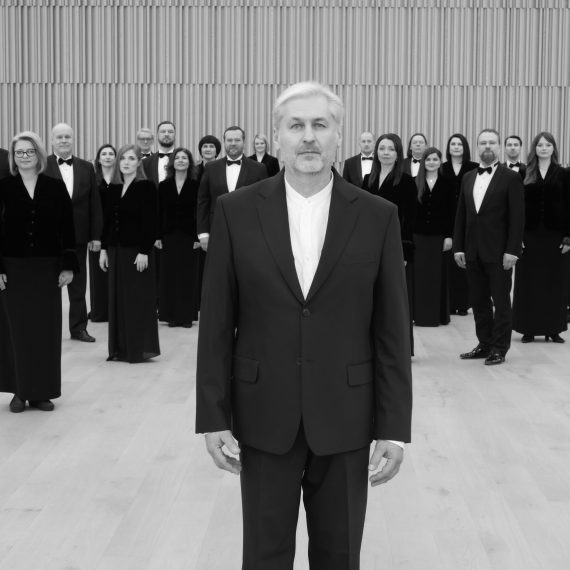
Latvian Radio Choir
NEU RECORDS
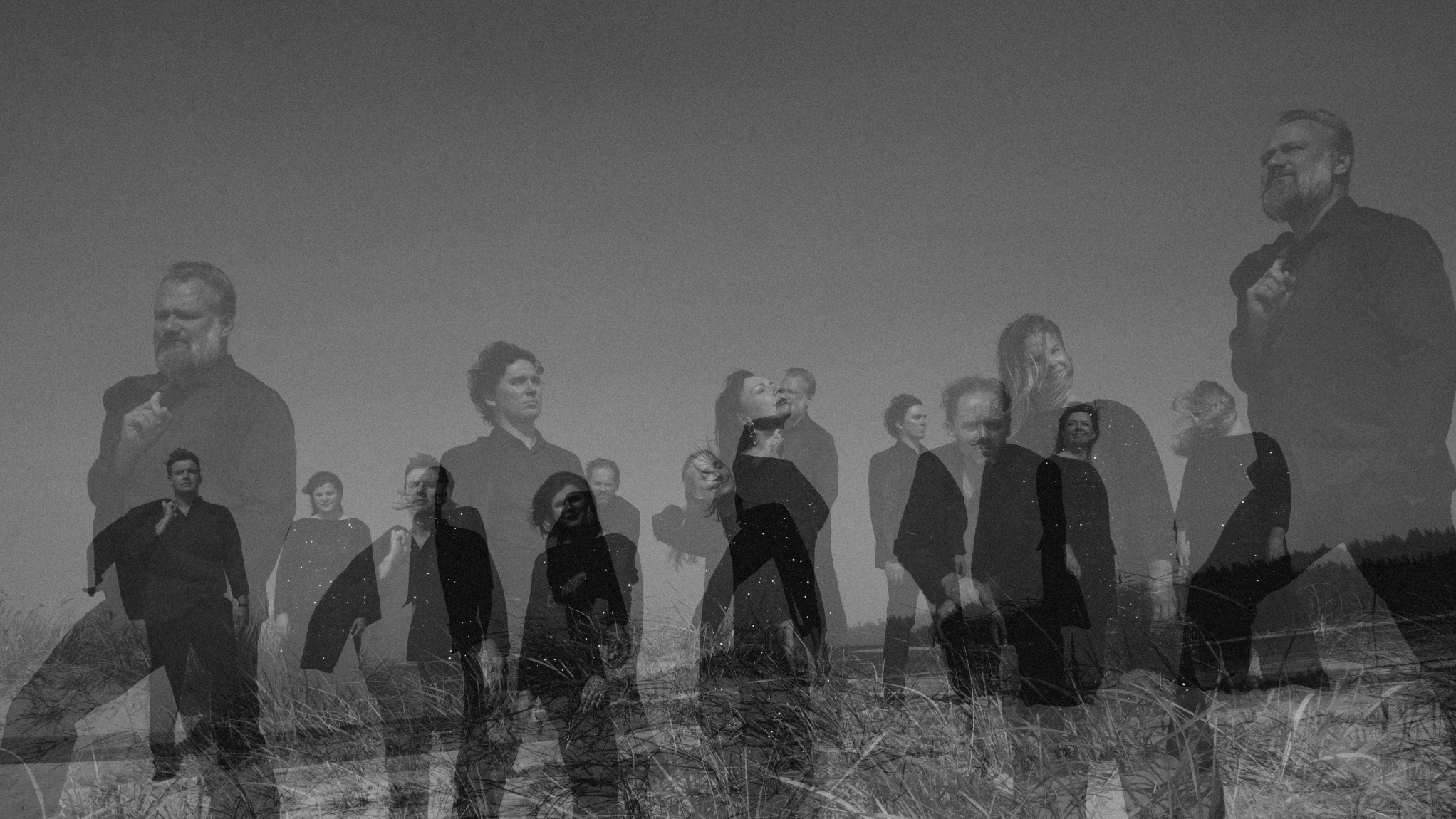
Bernat Vivancos
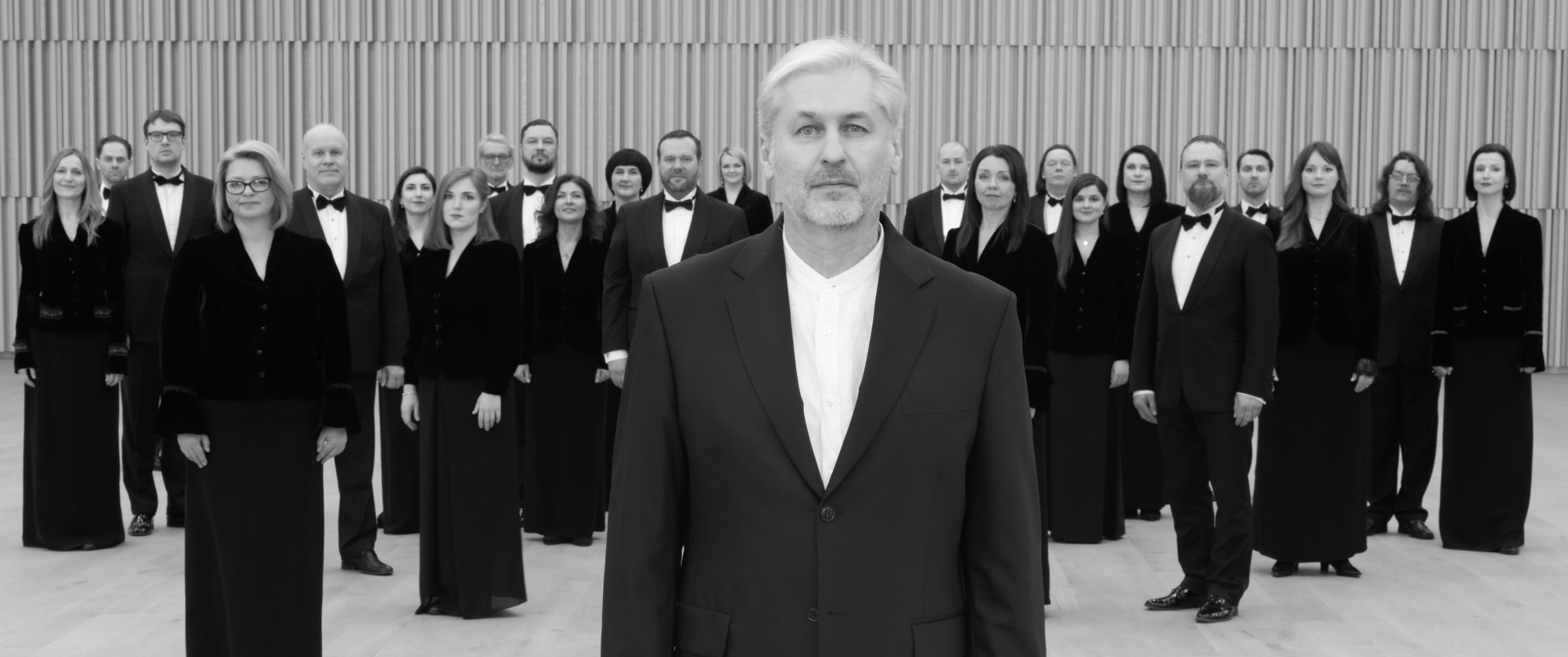
Latvian Radio Choir
Sigvards Kļava, conductor
Officium Hebdomadae Sanctae
for mixed choir a cappella
Feria V in Coena Domini
I. Amicus meus 07:37
II. Judas mercator pessimus 06:37
III. Una hora 05:44
Feria VI in Parasceve
IV. Tenebrae factae sunt 07:51
V. Tradiderunt me 07:07
VI. Caligaverunt oculi meo 06:59
Sabbato Sancto
VII. O vos omnes 09:00
VIII. Aestimatus sum 07:20
IX. Sepulto Domino 06:21
* World Premiere Recording
Total time: 64:41
Recorded in 3D format (Dolby Atmos 7.1.4), surround sound (5.1) and stereo (2.0)
BUY ALBUM
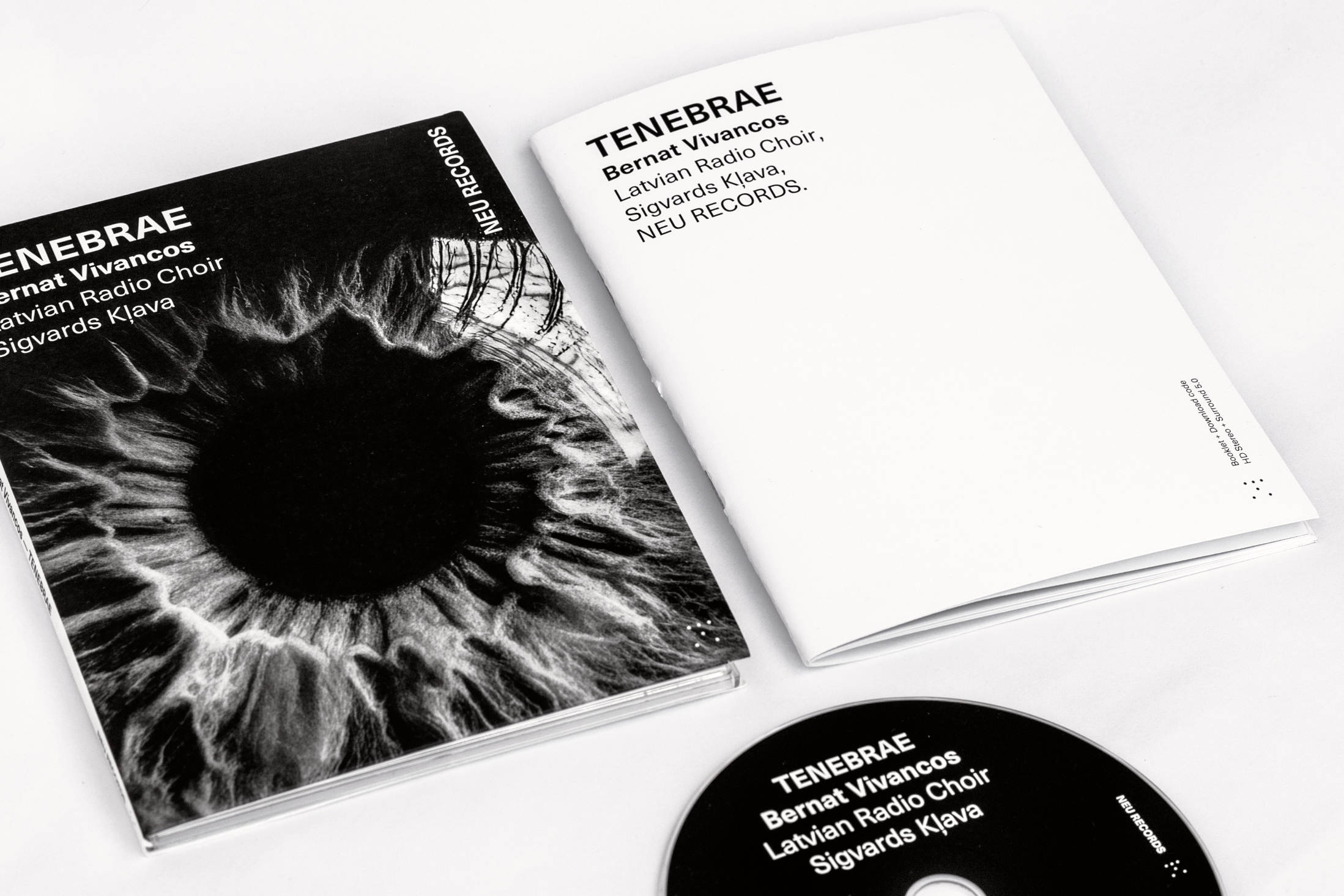
CD + Booklet — HD Digital format included — 21,90€
HD Digital — Stereo and Surround 5.1, 24bit 96kHz — 14€
Digital — Stereo, 16bit 48kHz — 10€
More info about formats here
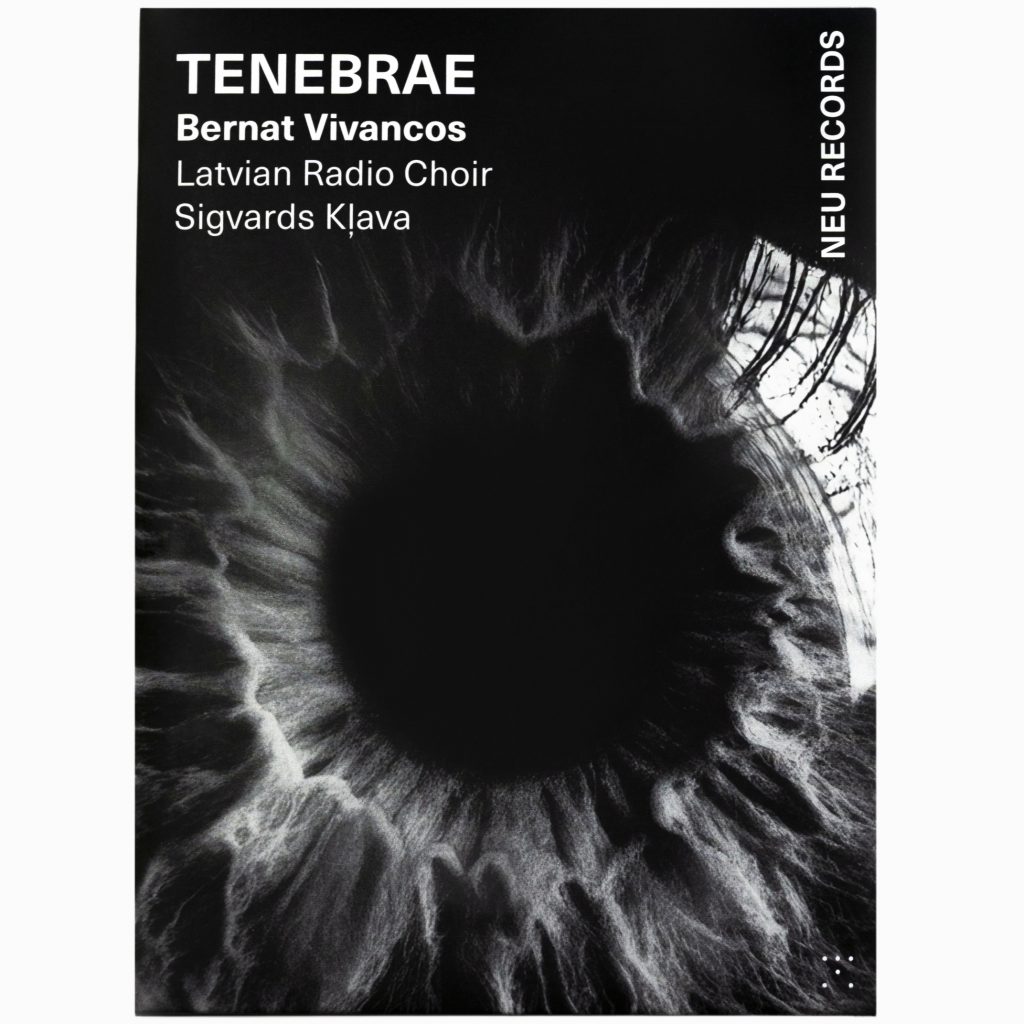
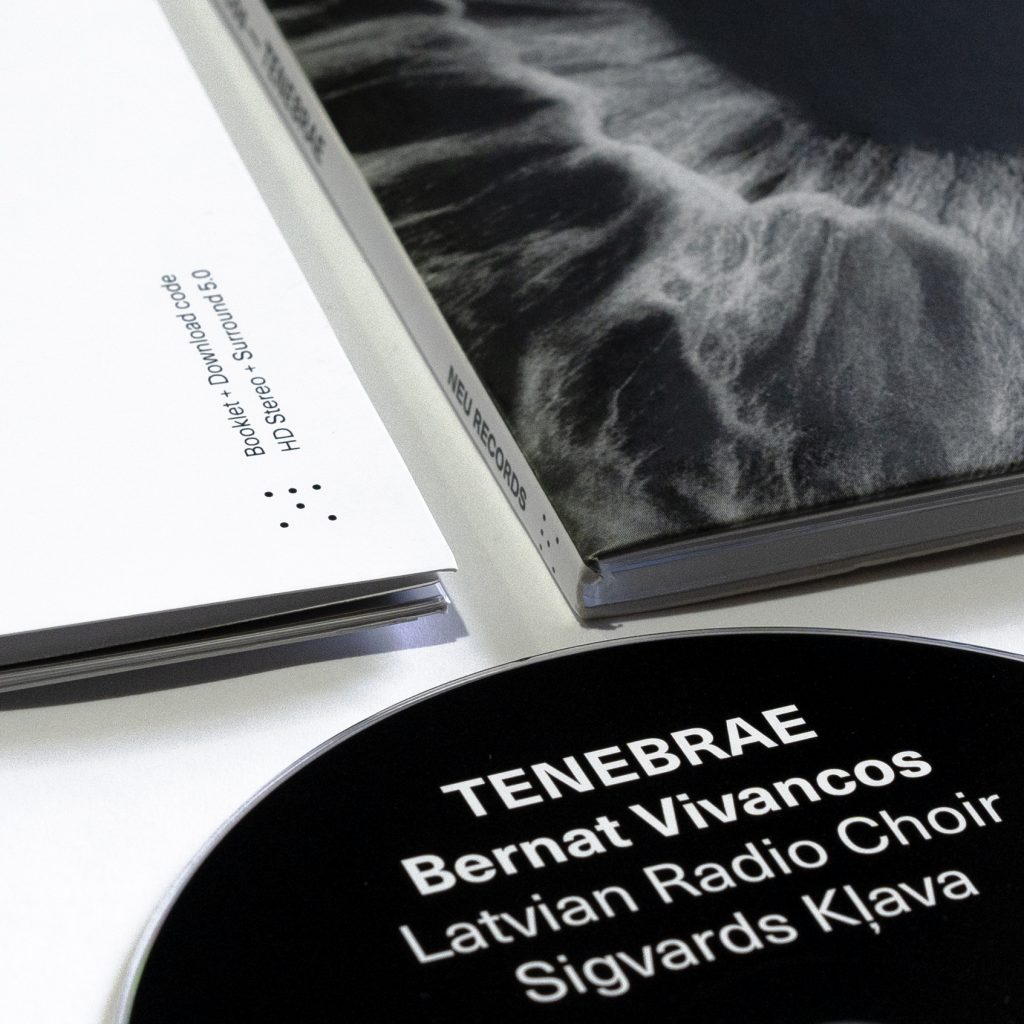
TENEBRAE
The record that you hold in your hands is an invitation to discover our inner spaciousness. And in these strange times we happen to live in, that discovery is by no means something inconsequential or trivial.
We are all living in a time that is marked by much disorientation and a stark lack of foundations; from a metaphysical point of view, this permeates our contemporary human experience. That is to say, there is a widely felt absence of a higher order, an absence of purpose and meaning. Or, if you like, we are lacking a metanarrative that guides us while transcending different worldviews, a common model of meaning that is capable of providing our collective human existence with the coherence that it needs to thrive. It is not superfluous to point out the profound sense of alienation affecting the modern self in all aspects. A modern self that lives alongside the plethora of urgent and daunting problems faced by today’s world. These are issues that are both global and local, and include social, political, economic, ecological, cultural and spiritual crises. The great irony of the moment we are living in is that, even though we have unprecedented levels of resources to deal with these problems, it is as though, at some deeper level, an invisible force is preventing us from being able to take the decisions to tackle them.
Into this general framework, we must also add the spiritual estrangement of the current modern psyche (soul) that exists within a completely disenchanted universe, as well as the same subjective split that separates modern human being from the rest of society, from nature and from the cosmos itself. As a result, we have become solitary beings, completely isolated from one another, detached, wandering and disoriented; at the same time, we have already begun to believe that we have lost that most precious thing of all: our soul. How did this happen? The philosopher Byung-Chul Han’s explanation is that it began when our society became algophobic: it is now a society that is allergic to pain and avoids it at all costs; it has instead become overcome by a Disneyland ethos, one that emphasizes that we should “be happy”. This mindset also makes us believe that suffering is always the result of our own failures, so we have ended up turning our lives into a matter of pure and simple survival, to avoid feeling pain at all costs. In this way, we have ended up shamelessly falling into the “princess and the pea” syndrome (we experience more and more suffering for things that are increasingly trivial), while at the same time enduring increasing isolation and loneliness. But how do we fight against this?
I cannot claim to know how to do this as a society, but I understand the potential generated by listening to these Responsories for Holy Week by Bernat Vivancos, a commission from the Peralada Festival (in the Empordà area in Catalonia) that premiered in the church of the Convent del Carme in that town on a very significant date in 2025: Good Friday, with the same performers as in this recording: the Latvian Radio Choir conducted by Sigvards Kļava.
Listening to these Responsories is a truly sublime aesthetic and musical experience. When the listener begins to listen to them they are one person; when they finish, they are another. This is an experience that allows them to connect with a musical presence that opens up the mystery of life itself, as well as the mystery of the passion and death of Jesus Christ.
Elaine Pagels, professor of the history of religions at Princeton University, in her book Miracles & Wonders, has pointed out how the figure of Jesus of Nazareth is not only that of a figure that once existed, but one that continues to be a powerful presence in the lives of many people today. Needless to say, this presence is palpable in the composition of this work, which finds its genealogy in Vivancos’ musical experience as a young member of the Escolania de Montserrat, when the choir recorded the Officium Hebdomadae Sanctae by Tomás Luis de Victoria (1548-1611). That work made a powerful impression on the composer even then: “the sacred emotionality of the compositions, the mysticism, the harmonies, the spirituality, but, above all, the relationship between each of the notes composed with the sacred text, notes which I could describe as being “prayed”, truly enchanted me.”
If that was Vivancos’ very first experience of the Easter Responsories genre, much later, as director of the Escolania de Montserrat – now in the 21st century – he once again became immersed in it when a recording was made by the choir of the Tenebrae Responsories by the outstanding composer of the Montserrat School, Narcís Casanoves (1747-1799). Catalan musical heritage has several important examples of the genre, including the Responsories of another Bernat, the late 15th century composer Bernat Icart, and also those of the composer from Mataró, Joan Pau Pujol (1570-1626).
But the roots of Vivancos’ piece are not to be found in this set of Responsories from the Catalan musical heritage. Nor can we find it in the mannerist and sometimes expressionist language of Tomás Luis de Victoria’s Responsories, which include the well-known ninth interval at the end of the first section of the Caligaverunt oculi mei, with the soprano voice highlighting the words “oculi mei” to emphasize the pain and tension felt. Instead, we understand that Vivancos is expressing a very personal, intimate experience that has deeply affected him throughout his life. It reflects the years he spent in the Escolania de Montserrat, where his musical vocation was unleashed, but also a conception of musical art that is inextricably linked to the search for an aesthetic journey related to the numinous experience that the German philosopher and theologian Rudolf Otto (1869-1937) explains so well in The Idea of the Holy. This numinous experience that he depicts allows us to name the avalanche of emotions, feelings and ontological states that surface when we listen to Vivancos’ Responsories. Otto exquisitely describes the feelings of divinity, transcendence, Mysterium Tremendum, the sublime, absolute inaccessibility, majesty, the irruption of a numinous energy, vastness, and fascination. And in addition, he describes the supernatural and otherworldly. Ultimately, approaching a work like these Responsories involves all these feelings, with the aforementioned mystery of the passion and death of Jesus of Nazareth.
The lessons of Holy Week, in their original Catholic context, form part of an important liturgical celebration, interpreted in the matins services on the Wednesday, Thursday, Friday and Saturday of Holy Week, when the passion and death of Jesus Christ are remembered. It is well known that this is one of the fundamental axes of the faith, along with the festivities of Corpus Christi or Christmas. These lessons of Holy Week, also called lamentations, have also been referred to as the “lessons of the shadows” (tenebrae), given the very little light that was left in the church after sets of candles were put out in turn (one after each psalm in the service).
These matins services are structured in three blocks called nocturnes, each of which contains three psalms, preceded by their corresponding antiphons, and three lessons, each of which is followed by a responsory. The texts of the lessons were taken from the Book of Lamentations, attributed to Jeremiah (ca. 650 BC-587 BC), considered one of the major prophets of the Hebrew Bible. He was the son of Hilkiah, a priest from Anathoth, and felt God’s calling to become a prophet at a very young age. He composed five elegiac poems in which he evoked his great sadness and pain for the destruction of Jerusalem, ordered by the Chaldean sovereign Nebuchadnezzar II (ca. 630 BC-562 BC) in the year 586 BC. These poems have always been recognized by Judaism as funeral chants. Each stanza begins with a letter of the Hebrew alphabet and structures the Latin text used in the Christian liturgy.
Although we have mentioned that we can find services of shadows for the Wednesday of Holy Week, with sublime musical examples such as those by François Couperin (1668-1733) or Niccolò Jommelli (1714-1774), and despite the fact that in many cathedrals and convents they begin to be sung on the Wednesday night, the so-called Officium Tenebrarum or Officium Hebdomadae Sanctae correspond mainly to the liturgical celebrations of Maundy Thursday (Feria V, In Coena Domini), Good Friday (Feria VI, In Parasceve) and Holy Saturday (Sabbato Sancto), making up the days known in the Catholic ritual as the Sacred Triduum (Triduum Sacrum). The compositions intended for these days were performed in the first light of the morning, when the large naves of churches and cathedrals were still filled with darkness or shadows. This fact, together with the aforementioned extinguishing of the candles, is what gave the service a character as solemn as it was mystical and mysterious, close to the category of Otto’s aforementioned “terrifying mystery”.
The pieces were sung by grouping them into the aforementioned nocturnes. All of them were headed by motets and other compositions of a similar nature. Then, in the first nocturne, there was an intonation of three lamentations – from The Lamentations of Jeremiah – sung before the responsories themselves, which closed the cycle. It must be said, however, that the responsory itself has a polyphonic form which is exceptionally constructed. This did not originally come from Gregorian chant, unlike most of the usual forms of sacred music intended for the Holy Week liturgy.
Among the numerous examples of responsories and lamentations for Holy Week composed throughout the history of Western music, we could mention those of Cristóbal de Morales (ca. 1500-1553), Giovanni Pierluigi da Palestrina (1525-1594) Orlando di Lasso (1532-1594), Pedro de Cristo (ca. 1550-1618), Carlo Gesualdo (1566-1613), Marc-Antoine Charpentier (1643-1704), Antonio Lotti (1667-1740), Jan Dismas Zelenka (1679-1745), Igor Stravinsky (1882-1971), Ernst Krenek (1900-1991) or James MacMillan (1959). As we have already said, Vivancos was deeply affected by the work of Tomás Luis de Victoria when he was a young chorister. And this led him to make a solemn promise to himself: that one day, he too would also compose a collection of responsories. This promise and this “one day” are now a reality. They are the work that you have in your hands and that he has structured into nine responsories, three for each of the holy days: Amicus meus, Judas Mercator pessimus, Una hora (Maundy Thursday); Tenebrae factae sunt, Tradiderunt me, Caligaverunt oculi mei (Good Friday) and O vos omnes, Aestimatus sum and Sepulto Domino (Holy Saturday).
When you first listen to this work, you hear the reverberation and resonance of a tradition which Vivancos has never wanted to merely imitate. Despite following the techniques of historical musical writing typical of prima pratica, adopting a polyphonic architecture that is characteristic of the Renaissance, such as writing for six voices (two sopranos, alto, tenor, baritone and bass) or the use of the textual figurativeness, symbolism and rhetoric that are so distinctive of the Baroque period – insofar as the creative push behind these responsories has been clearly determined by the choice of texts and their meaning – Vivancos has not limited himself to wanting to translate this meaning by simply putting the text to music, but has been able to fulfil his inner need by reflecting his soul – or his inner spaciousness. This is what he strives to share with us by composing this work, and that we can discover as we listen to it.
Describing the work as a whole, it can be said that the composer plays with a broad concept of duality and dialectics: we find play between homophony and polyphony, light and darkness, the earthly world and the divine world, as well as celestial sonorities and moments of darkness, such as in the dissonances we find in O Vos Omnes, which could resonate as a musical image of the nails piercing the wrists during the crucifixion. Bernat Vivancos knows how to establish his own voice: within this unique repertoire – which is typical of a particular moment in the liturgical calendar – he opens up a space for dialogue between the polyphonic tradition of the Hispanic Golden Age and the timbral and harmonic innovations from romantic and contemporary polyphonic language, with harmonies that could remind us of Hector Berlioz, Jonathan Harvey, John Tavener or Arvo Pärt. The carefully achieved synthesis and unity of these two traditions, together with the aforementioned dialectic, allows Vivancos’ work to achieve three keenly sought-after qualities: essence, experience and providence.
Rudolf Otto stated that one of the best definitions of a numinous experience was the one developed by the Lutheran mystic and theosophist Jacob Böhme (1575-1624). In the five hundred years since Böhme’s birth, and in the context of listening to these responsories by Bernat Vivancos, which are so deeply rooted in the Catholic context, it is not superfluous to recall the definition of numinous experience developed by Otto thanks to Böhme: “I cannot write or say what kind of triumph has occurred in the spirit. It cannot be compared to anything other than the birth of life in the midst of death, and to the resurrection of the dead.”
After listening to Bernat Vivancos’ responsories and integrating them into our inner spaciousness, from now on, Holy Week will be commemorated with more essence, experience and providence.
ORIOL PÉREZ I TREVIÑO
El disc que teniu a les vostres mans és una invitació a la descoberta de la nostra espaiositat interior. I aquesta descoberta no és, en absolut, un fet menor o secundari en els estranys temps que ens ha tocat viure.
Vivim, col·lectivament, en uns temps marcats per una gran desorientació i una manca de fonament que, des del punt de vista metafísic, impregna la nostra experiència humana contemporània. Això és: l’absència, àmpliament sentida, d’un ordre major, àmpliament accessible, de finalitat i de significat. O, si voleu, d’una metanarració orientativa que transcendeixi les diferents visions del món, i d’un model general de sentit capaç de proporcionar a l’existència humana col·lectiva el necessari aliment de coherència. No és sobrer assenyalar un profund sentit d’alienació que afecta, plenament, el nostre jo modern. Un jo modern que viu acompanyat d’una multitud de formidables i urgents altres problemes –globals i locals, socials, polítics, econòmics, ecològics, culturals i espirituals– que afronta el món d’avui. El gran enigma del moment actual, però, és que, tot i comptar amb una quantitat de recursos sense precedents per fer front a aquests problemes, és com si, en algun context més gran o més profund, una força invisible ens negués la capacitat i la decisió per fer-ho.
També, dins aquest marc general, ens cal afegir l’estranyament espiritual de l’actual psique (ànima) moderna enmig d’un univers totalment desencantat, així com, en l’àmbit d’espècie, la mateixa escissió subjectiva que separa l’ésser humà modern de la resta de la societat, la natura i el mateix cosmos. Per la qual cosa, ens hem convertit en uns éssers solitaris, completament escindits, deslligats, errabunds i erràtics; tanmateix, ja ens hem començat a creure que hem perdut el bé més preuat de tots: l’ànima. Com? Des del moment que la nostra societat s’ha convertit, com assenyala el filòsof Byung-Chul Han, en una societat algofòbica. Això és: en una societat que té fòbia i al·lèrgia al dolor, en estar completament vertebrada per una dominació waltdisneyana, com és la de «sigues feliç». Aquesta dominació també ens ha fet creure que el patiment és sempre resultat del nostre propi fracàs, per la qual cosa hem acabat convertint les nostres vides en una simple qüestió de pura supervivència, per evitar, com sigui, aquesta manifestació del dolor. D’aquesta manera, hem acabat patint sense vergonya la síndrome de «la princesa i el pèsol» (patim més per cada vegada menys), a la vegada que som presos de l’aïllament i la soledat creixents. Com es combat, però, aquesta manifestació?
Aquest cronista no sabria indicar com portar-ho a terme en la dimensió col·lectiva, però sí sap i coneix la potencialitat que genera l’audició d’aquests Responsoris de Setmana Santa de Bernat Vivancos, un encàrrec del Festival de Peralada que es va estrenar a l’església del Convent del Carme d’aquest municipi empordanès, en una data tan assenyalada com el Divendres Sant de 2025, amb els mateixos intèrprets d’aquest enregistrament: el Latvian Radio Choir que dirigeix Sigvards Kļava.
Una vegada aquest lector hagi escoltat aquests Responsoris, haurà pogut viure una experiència estètica i musical de primer ordre. És l’ordre que s’assoleix quan l’oient inicia l’audició sent d’una manera i en acabar n’és d’una altra. Una experiència que possibilita el contacte amb una presència musical que entreobre el propi misteri de la vida, com també el misteri de la passió i mort de Jesucrist.
La professora d’història de les religions a la Princeton University, Elaine Pagels, en el seu llibre Miracles & Wonders, ha assenyalat com la figura de Jesús de Natzaret no només és una figura que era o va ser, sinó que segueix sent una presència poderosa en la vida de moltes persones del present. No cal dir que aquesta presència traspua en la composició d’aquesta obra, que troba la seva genealogia en la seva experiència musical viscuda, com a escolà de Montserrat, en l’enregistrament de l’Officium Hebdomadae Sanctae de Tomás Luis de Victoria (1548-1611). Ja aleshores, segons paraules del mateix compositor, aquella obra li va produir una forta impressió: «l’emotivitat sacra de les seves composicions, la seva mística, les seves harmonies, la seva espiritualitat, però, sobretot, la relació entre cadascuna de les notes que componia amb el text sagrat, “resat” diria, em va seduir moltíssim».
Si aquella va ser la primera mirada de Vivancos cap al gènere dels Responsoris de Setmana Santa, amb el pas del temps, en una nova ocasió i com a director de l’Escolania de Montserrat –ja al segle XXI–, l’enregistrament discogràfic dels Responsoris de Tenebres del destacat compositor sabadellenc de l’Escola montserratina, Narcís Casanoves (1747-1799), el va tornar a posar en contacte i ressonància amb un gènere que el patrimoni musical català ens n’ha llegat importants mostres. Entre d’altres, les d’un altre Bernat, el compositor de finals del segle XV Bernat Icart, però també les del mataroní Joan Pau Pujol (1570-1626).
Però no és en aquest conjunt de Responsoris del patrimoni musical català on haurem de trobar l’arrelament de la proposta de Vivancos. Com tampoc en el llenguatge manierista, a voltes expressionista, dels citats Responsoris de Victoria –recordem el conegut salt de novena que el compositor alavés va escriure, al final de la primera secció del Caligaverunt oculi mei, a la veu de soprano per fer ressaltar la paraula «oculi mei», tot accentuant el caràcter de dolor i tensió–, sinó més aviat en una vivència personal i interior del compositor que per sempre més l’ha acompanyat. Aquesta vivència és la viscuda en els seus anys com a escolà de Montserrat, on es va desfermar una vocació musical, però també una concepció de l’art musical indissociable de la recerca d’una experiència estètica que porta en ella mateixa quelcom relacionat amb l’experiència numinosa que tan bé ens explica Rudolf Otto (1869-1937) a El sagrat. Aquesta experiència numinosa descrita pel filòsof i teòleg alemany és la que ens permet posar nom al devessall d’emocions, sentiments i estats ontològics que afloren amb l’audició dels Responsoris de Vivancos: el sentit de la divinitat, la inefabilitat, el Mysterium Tremendum (Misteri estremidor), la sublimitat, la inaccesibilitat absoluta, la categoria de la majestat, la irrupció d’una energia numinosa, el fascinant, el descomunal. I també allò sobrenatural i ultramundà. I és que, en darrera instància, aproximar-se a una obra com aquests Responsoris és fer-ho, implícitament, amb el ja citat misteri de la passió i mort de Jesús de Natzaret.
Les lliçons de Setmana Santa, en el seu context catòlic original, són una important celebració que s’interpreta en els oficis de matines de dimecres, dijous, divendres i dissabte de Setmana Santa, quan es rememora la passió i la mort de Jesucrist, que com és ben sabut, és un dels eixos fonamentals de la fe, juntament a les festivitats del Corpus Christi o Nadal. Aquestes lliçons de Setmana Santa, també anomenades lamentacions, eren i són conegudes amb el sobrenom «de tenebres», atesa l’escassa il·luminació que quedava a l’església després de l’apagada progressiva d’un conjunt d’espelmes –una després de cada salm de l’ofici–.
Aquests oficis de matines s’estructuren en tres blocs anomenats nocturns, cadascun dels quals conté tres salms, precedits de les seves corresponents antífones, i tres lliçons, a cadascuna de les quals li segueix un responsori. Els textos de les lliçons van ser agafats del conegut Llibre de les Lamentacions, atribuït a Jeremies (ca. 650 aC-587 aC), i considerat un dels profetes majors de la Bíblia hebrea. Fill de Hilkiah, sacerdot d’Anathoth, i cridat per Déu a profetitzar ja de molt jove, va compondre cinc poemes elegíacs on va evocar la tristor i el dolor per la destrucció de Jerusalem, ordenada pel sobirà caldeu Nabucodonosor II (ca. 630 aC-562 aC), l’any 586 aC. Des d’aleshores aquests poemes han estat reconeguts pel judaisme com a cant funerari. Cadascuna de les seves estrofes s’inicia amb amb una lletra de l’alfabet hebreu i estructura el text llatí que s’utilitza en la litúrgia cristiana.
Si bé hem esmentat que podem localitzar oficis de tenebres per als dimecres de Setmana Santa, amb sublims exemples musicals com poden ser els de François Couperin (1668-1733) o Niccolò Jommelli (1714-1774) –i malgrat que en moltes catedrals i convents ja es comencessin a cantar la nit de dimecres–, no és menys cert que els anomenats Officium Tenebrarum o Officium Hebdomadae Sanctae es corresponen, principalment, amb les celebracions litúrgiques de Dijous Sant (Feria V, In Coena Domini), Divendres Sant (Feria VI, In Parasceve) i Dissabte Sant (Sabbato Sancto), dies coneguts dins el ritual catòlic com el Tridu Sagrat (Triduum Sacrum). Les composicions destinades a aquests dies s’interpretaven en les primeres clarors del matí, quan encara la foscor o les tenebres (tenebrae) envaïen les grans naus de les esglésies i catedrals. Aquest fet, junt amb l’esmentada apagada de les espelmes, és el que donava a l’ofici un caràcter tan solemne com místic i misteriós, pròxim a la categoria del citat «Misteri estremidor» d’Otto.
La interpretació de les peces es feia agrupant-les segons els esmentats nocturns. Tots ells eren encapçalats per motets i altres composicions de naturalesa similar. A continuació, en el primer nocturn, s’entonaven les lamentacions –Lamentacions de Jeremies– que, en nombre de tres, s’interpretaven abans dels mateixos responsoris, els quals, finalment, tancaven el cicle. Cal dir, però, que el responsori pròpiament dit és una forma polifònica d’excepcional construcció, ja que originàriament no provenia del cant gregorià, d’on deriven la majoria de les formes habituals de la música sacra destinada a la litúrgia de la Setmana Santa.
D’entre els nombrosos exemples de responsoris i lamentacions de Setmana Santa compostos al llarg de la història de la música occidental, serveixin com a mostres, entre molts possibles, les de Cristóbal de Morales (ca. 1500-1553), Giovanni Pierluigi da Palestrina (1525-1594) Orlando di Lasso (1532-1594), Pedro de Cristo (ca. 1550-1618), Carlo Gesualdo (1566-1613), Marc-Antoine Charpentier (1643-1704), Antonio Lotti (1667-1740), Jan Dismas Zelenka (1679-1745), Igor Stravinsky (1882-1971), Ernst Krenek (1900-1991) o James MacMillan (1959). De l’obra de Tomás Luis de Victoria, com ja hem dit, Vivancos en va quedar profundament colpit i afectat com a escolà. I, d’aquí, es va veure obligat a autoimposar-se una promesa: que ell, algun dia, també compondria una col·lecció de responsoris. Aquesta promesa i aquest “algun dia” ja són una realitat. Són l’obra que teniu a les vostres mans i que ha estructurat en nou responsoris, tres per a cadascuna de les jornades: Amicus meus, Judas Mercator pessimus, Una hora (Dijous Sant); Tenebrae factae sunt, Tradiderunt me, Caligaverunt oculi mei (Divendres Sant) i O vos omnes, Aestimatus sum i Sepulto Domino (Dissabte Sant).
Una primera audició d’aquesta obra ens porta a la reverberació i la ressonància d’una tradició envers la qual Vivancos no ha volgut mai quedar-se en una mera imitació. Tot i seguir les tècniques d’una escriptura musical històrica i pròpia de la prima pratica, amb l’adopció d’una arquitectura polifònica característica del Renaixement, com ho és l’escriptura a sis veus (dos sopranos, alto, tenor, baríton i baix) o bé l’ús del figuralisme, simbolisme i retòrica textuals més distintius del període barroc –en tant que el motor creatiu d’aquests responsoris ha vingut clarament determinat per l’elecció dels textos i del seu significat–, Vivancos no s’ha limitat a voler traduir aquest significat en una materialització a partir de la simple musicació del text, sinó que ha sabut trobar la seva necessitat interior gràcies a una vibració de la seva ànima –o de la seva espaiositat interior– que ens vol compartir amb la composició de l’obra, i que podem anar descobrint al llarg de l’audició.
En un aspecte més descriptiu del conjunt de l’obra, es pot dir que el compositor juga amb un ampli concepte de la dualitat i de la dialèctica, en tant que hi trobem un joc entre l’homofonia i la polifonia; la llum i la foscor; el món terrenal i el món diví; les sonoritats celestials i els moments de foscor, com ara les dissonàncies que trobem a l’O Vos Omnes, que ens poden ressonar com una imatge musical dels claus entrant al canell del crucificat. Bernat Vivancos sap assolir una veu pròpia, proporcionant a un repertori tan singular –i propi d’un moment del calendari litúrgic– un espai de diàleg entre la tradició de la polifonia del segle d’or hispànic i les innovacions tímbriques i harmòniques provinents del llenguatge polifònic romàntic i contemporani, amb harmonies que poden fer-nos pensar amb Hector Berlioz, Jonathan Harvey, John Tavener o Arvo Pärt. La saviesa en assolir la síntesi i la unitat d’aquestes dues tradicions, junt a l’esmentada dialèctica, permeten Vivancos arribar a tres de les presències més buscades en la seva obra: l’essència, la vivència i la providència.
Afirmava Rudolf Otto que una de les millors definicions d’una experiència numinosa era la que havia deixat escrita el místic i teòsof luterà Jacob Böhme (1575-1624). En els cinc-cents anys del seu naixement, i en el marc de l’audició d’aquests responsoris de Bernat de Vivancos, tan arrelats al context catòlic, no serà sobrer recordar la definició d’experiència numinosa apuntada per Otto gràcies al teòsof luterà: «No puc escriure ni dir quina mena de triomf s’ha produït en l’esperit. No es pot comparar amb res més que amb el naixement de la vida enmig de la mort, i amb la resurrecció dels morts».
Després d’haver escoltat i integrat en la nostra espaiositat interior aquests responsoris de Bernat Vivancos, la commemoració de la Setmana Santa, a partir d’ara, s’haurà de viure amb més essència, vivència i providència.
ORIOL PÉREZ I TREVIÑO

Officium Hebdomadae Sanctae
I. Amicus meus
Amicus meus osculi me tradidit signo:
Quem osculatus fuero, ipse est, tenete eum:
hoc malum fecit signum,
qui per osculum adimplevit homicidium.
Infelix praetermisit pretium sanguinis,
et in fine laqueo se suspendit.
Bonum erat illi, si natus non fuisset homo ille.
Infelix praetermisit pretium sanguinis,
et in fine laqueo se suspendit.
Mt. 26, 50
II. Judas mercator pessimus
Judas mercator pessimus osculo petiit Dominum;
ille ut agnus innocens non negavit Iudae osculum.
Denariorum numero Christum Iudaeis tradidit.
Melius illi erat, si natus non fuisset.
Denariorum numero Christum Iudaeis tradidit.
Lc. 22, 48
III. Una hora
Una hora non potuistis vigilare mecum,
qui exhortabamini mori pro me?
Vel Iudam non videtis, quomodo non dormit,
sed festinat tradere me Iudaeis?
Quid dormitis? Surgite, et orate,
ne intretis in tentationem.
Vel Iudam non videtis, quomodo non dormit.
sed festinat tradere me Iudaeis?
Mt. 26, 40; Lc. 22, 46
IV. Tenebrae factae sunt
Tenebrae factae sunt,
dum crucifixissent lesum Iudaei:
et circa horam nonam exclamavit Iesus voce magna:
Deus meus, ut quid me dereliquisti?
Et inclinato capite, emisit spiritum.
Exclamans Iesus voce magna ait:
Pater, in manus tuas commendo spiritum meum.
Et inclinato capite, emisit spiritum.
Mt. 27, 45-46; Lc. 23, 46
V. Tradiderunt me
Tradiderunt me in manus impiorum,
et inter iniquos proiecerunt me,
et non pepercerunt animae meae:
congregati sunt adversum me fortes:
Et sicut gigantes steterunt contra me.
Alieni insurrexerunt adversum me,
et fortes quaesierunt animam meam.
Et sicut gigantes steterunt contra me.
VI. Caligaverunt oculi meo
Caligaverunt oculi mei a fletu meo:
quia elongatus est a me, qui consolabatur me:
Videte, omnes populi,
si est dolor similis sicut dolor meus.
O vos omnes, qui transitis per viam,
attendite et videte
Si est dolor similis sicut dolor meus.
Caligaverunt oculi mei a fletu meo:
quia elongatus est a me, qui consolabatur me:
Videte, omnes populi,
si est dolor similis sicut dolor meus.
Job 16, 17; Lm. 1, 12
VII. O vos omnes
O vos omnes
qui transitis per viam
attendite et videte
si est dolor similis
sicut dolor meus
attendite universi populi
et videte
dolorem meum
si est dolor similis
sicut dolor meus.
VIII. Aestimatus sum
Aestimatus sum cum descendentibus in lacum:
Factus sum sicut homo sine adiutorio,
inter mortuos liber.
Posuerunt me in lacu inferiori,
in tenebrosis, et in umbra mortis.
Factus sum sicut homo sine adiutorio,
inter mortuos liber.
IX. Sepulto Domino
Sepulto Domino, signatum est monumentum,
volventes lapidem ad ostium monumenti:
Ponentes milites, qui custodirent illum.
Accedentes principes sacerdotum ad Pilatum, petierunt illum.
Ponentes milites, qui custodirent illum.
Sepulto Domino, signatum est monumentum,
volventes lapidem ad ostium monumenti:
Ponentes milites, qui custodirent illum.
Matth. 27, 62-66
CREDITS
Recorded at
St. John’s Church
Svētā Jāņa baznīca
Riga, Latvia
April 2025
Composed by
Bernat Vivancos
Performed by
Latvian Radio Choir
Sigvard Kļava, conductor
Latvian Radio Choir’s Managing Director
Ilze Paidere-Staķe
Liner notes
Oriol Pérez i Treviño
Recording
Santi Barguñó, Hugo Romano Guimarães
Mixed and mastered with
ATC Speakers
Graphic art direction
Lorena Alonso
Produced by
Santi Barguñó
Latvian Radio Choir · Photos
Blanc, Latvian Radio Choir, Requiem, Tenebrae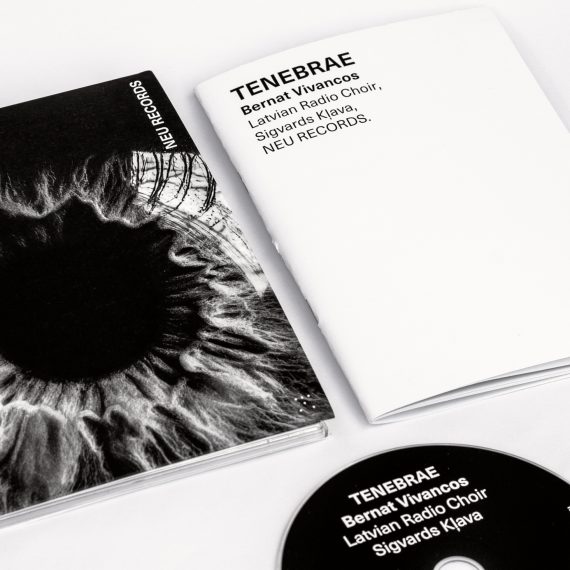
Tenebrae · Album images
Bernat Vivancos, Latvian Radio Choir, Sigvards Klava, TenebraeREVIEWS
Coming soon.
SUPPORTED BY
